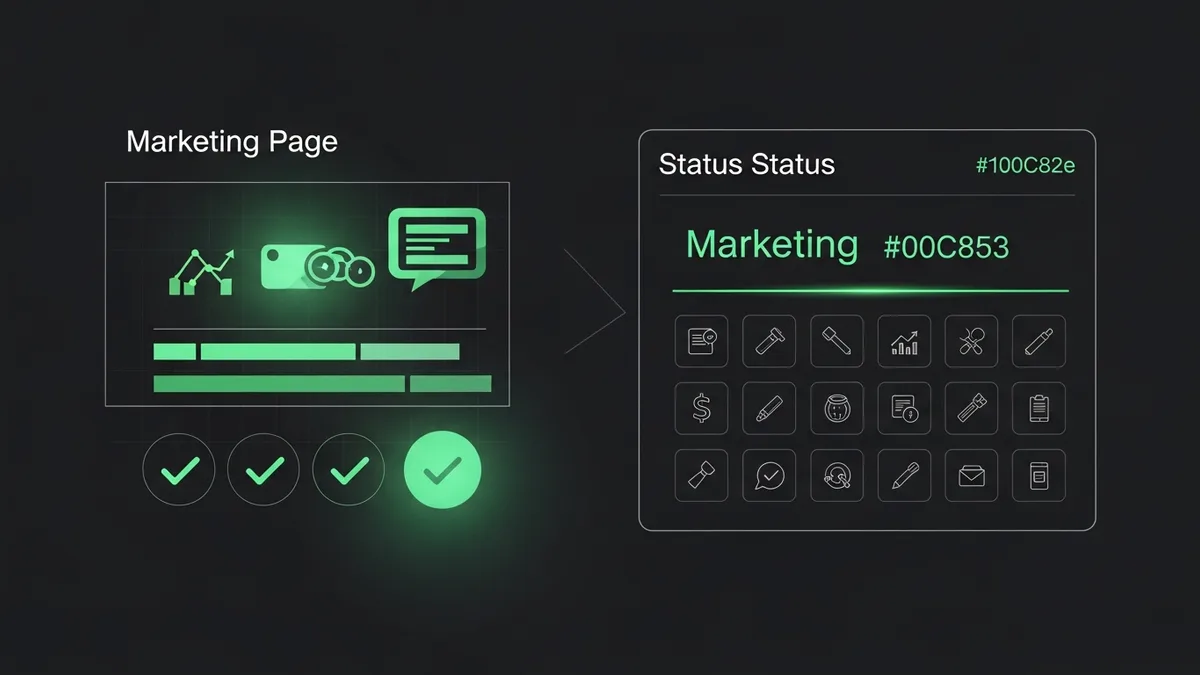
I spent three months trying to make Atlassian Statuspage work for our marketing team. Custom components for each funnel. Subscriber notifications for stakeholders. Manual incident updates every time something broke. It was a full-time job that nobody signed up for.
Why Traditional Status Pages Don't Fit Marketing Teams
Statuspage, Instatus, Cachet — these tools were built for engineering teams running SaaS products. They expect you to manually create incidents, update statuses, and resolve them. That works when you have an on-call SRE who lives in PagerDuty. It doesn't work when your "team" is three marketers, a freelance designer, and a shared Slack channel.
The core problem with using a statuspage for marketing is that marketing incidents are different from engineering incidents. Your landing page might be up but serving the wrong content. Your tracking pixel might fire but send data to the wrong conversion event. Your form might load but break on a specific browser version that 22% of your audience uses.
None of those problems fit neatly into "Operational / Degraded / Major Outage" categories.
What Marketing Teams Actually Need
After trying three different status page tools over the past year, here's what I think marketing teams actually need:
- Automatic detection of funnel problems (not manual incident creation)
- Alerts that go to the right person immediately, not a public status page nobody checks
- Context about business impact: how much ad spend is at risk, how many visitors are affected
- Fast resolution tracking without requiring someone to babysit a dashboard
A traditional statuspage for marketing becomes a reporting burden. Someone has to monitor the monitoring tool. That's backwards. Your monitoring should tell you when something's wrong, not wait for you to tell it.
How We Replaced Status Pages with Funnel Monitoring
We ditched our Statuspage setup last February and switched to a model where FunnelLeaks monitors every funnel page automatically. When something breaks, the alert goes straight to Slack with the specific page, the type of failure, and which ad campaigns are driving traffic to it. No manual incident creation. No status categories. Just "this page is broken, this is what's at risk, fix it."
The result? Our mean time to detection dropped from 45 minutes (checking the status page periodically) to under 3 minutes (automated alerts). And we stopped spending 4-5 hours per week maintaining status page components and writing incident updates that, honestly, nobody was reading.
When a Status Page Still Makes Sense
I'm not saying status pages are always wrong. If you're an agency managing 20+ clients and you need a shared view of which client funnels are healthy, a simple status dashboard can help. Pingdom offers public status pages that work well for this use case.
But if your goal is catching and fixing marketing funnel problems fast, a statuspage for marketing is the wrong tool. It's a communication layer, not a detection layer. You need detection first. Communication second.
The question to ask yourself: how are you finding out about funnel problems right now? If the answer involves someone manually checking pages, or a client sending you an angry email, or noticing a revenue dip three days later, you've got a detection gap that no status page will fix. FunnelLeaks fills that gap by watching your pages and alerting you before the damage compounds. What tool are you using right now to catch funnel breaks?