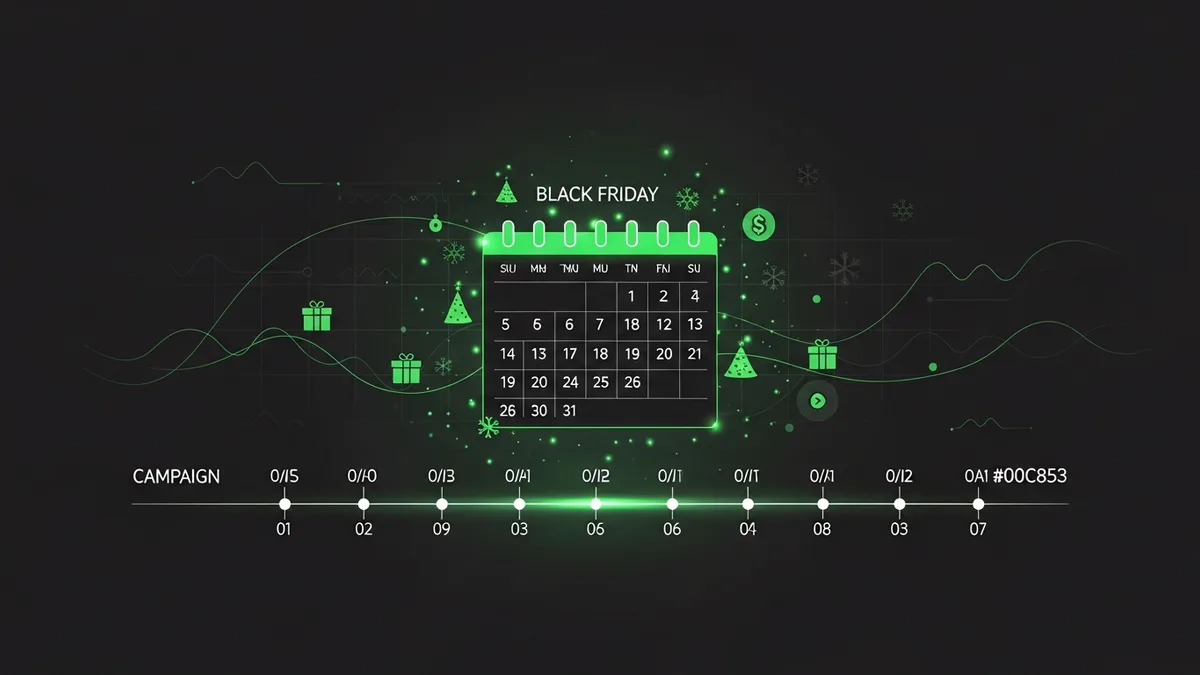
I know it's March. Black Friday is eight months away. But the teams that crush Black Friday start planning in spring, and the ones that scramble in October end up with broken funnels, missed revenue, and post-mortem meetings nobody enjoys.
Your black friday campaign preparation checklist should start now.
Why March Is the Right Time to Start
Black Friday 2025 was a bloodbath for unprepared brands. Shopify reported $9.3 billion in merchant sales over the BFCM weekend. But behind that headline number, thousands of stores experienced checkout failures, page speed crashes, and tracking breakdowns that cost them a meaningful chunk of revenue.
The brands that avoided those problems didn't get lucky. They spent months testing, hardening, and monitoring their funnels before the traffic hit. March gives you enough runway to identify weak points, fix them, and stress-test before things get hectic in Q4.
A Black Friday Campaign Preparation Checklist That Starts Now
Here's what we recommend working through between now and September:
Infrastructure audit (March-April). Check your hosting limits. How much traffic can your site handle before it slows down or crashes? Run a load test. If you're on shared hosting or a basic Shopify plan, find out where your ceiling is. You don't want to discover it on Black Friday morning.
Funnel flow testing (April-May). Walk through every step of your purchase funnel on desktop, mobile, and tablet. Test every payment method. Apply discount codes. Try edge cases like applying two codes at once, or checking out with an international address. Document what breaks.
Tracking verification (May-June). Confirm that your Facebook pixel, Google conversion tags, and any other tracking fires correctly on every conversion event. Run test purchases and verify the data shows up in each ad platform. Broken tracking during BFCM means your campaigns can't learn or report accurately.
Monitoring setup (June-July). Get automated funnel monitoring running well before the season. You want months of baseline data so you can spot anomalies during the actual event. FunnelLeaks gives you this. Set it up in the spring and let it build your baseline.
Incident response drill (August-September). Simulate a checkout failure during a high-traffic period. Time your response. Can you pause ads and alert your team within 15 minutes? If not, fix the process before November.
The Mistakes I See Every Year
Teams launch new landing pages in October and don't test them thoroughly. Discount codes get created but never verified in the actual checkout flow. Ad campaigns get built on top of tracking that nobody has validated since the previous year. And the biggest one: no monitoring at all. Just hoping that everything works during the highest-traffic, highest-stakes period of the year.
Hope is not a strategy. A proper black friday campaign preparation checklist is.
What About Other Seasonal Campaigns?
This same framework applies to any peak period. Easter sales, summer clearance events, back-to-school campaigns. The timeline compresses, but the categories stay the same: infrastructure, funnel flow, tracking, monitoring, and response planning.
If you've got a spring campaign launching this month, treat it as a dress rehearsal for BFCM. Test your systems under increased load. Verify your tracking across platforms using Google Search Console and your ad platform dashboards. Use the lessons you learn now to build a tighter process for the fall.
Start your black friday campaign preparation checklist today, not in October. Visit FunnelLeaks pricing to get monitoring running before your next big push.