You Do Not Need a Developer to Find What Is Broken
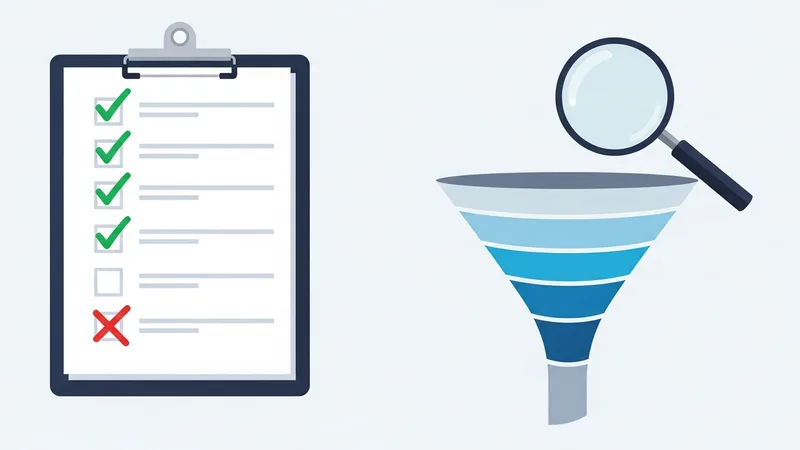
A marketing funnel audit does not require a developer or special tools. You need 30 minutes, a browser, and a checklist. I hear the same excuse from marketers every week: "I know I should audit my funnel, but I do not have the technical skills." The truth is that most critical funnel failures can be identified by anyone who can open a browser and follow a checklist. You do not need to read code. You do not need developer tools. You just need 30 minutes and a systematic approach.
This audit will not catch every possible issue. But it will catch the ones that cost you the most money. The broken forms, the slow pages, the dead tracking pixels, and the redirect failures that silently eat your ad budget.
Your 30-Minute Marketing Funnel Audit Checklist
Open three things before you begin:
- An incognito or private browser window. This ensures you see what a first-time visitor sees, without cached data or saved cookies
- Your phone. You will test the mobile experience separately
- A notepad or document to record issues. You will want a list of everything that needs fixing, ranked by severity
Minutes 1-5: Landing Page Health Check
Open your primary landing page in your incognito window. Do not click anything yet. Just observe:
This connects directly to what we explored in dNS Expiration Is the Funnel Killer Nobody Talks About.
- How long did it take to load?. Count in your head. If you counted past three, your page is too slow and you are losing visitors. For specific benchmarks, read our analysis on how page speed kills conversions.
- Does the page look correct?. Check for broken images, overlapping text, missing sections, or layout issues. Pay special attention to the hero section and the primary call-to-action.
- Is the SSL certificate valid?. Look at the browser address bar. You should see a padlock icon. If you see a warning or the URL shows http instead of https, your certificate has an issue. We cover why this matters in our piece on SSL certificate monitoring.
- Does the page scroll smoothly?. Scroll from top to bottom. Look for janky animations, content that loads late and shifts the layout, or sections that do not render until you scroll to them.
Minutes 5-10: Form Testing
Find every form on your landing page. For each form: This is a marketing funnel audit problem that monitoring catches early.
- Fill in every field with test data. Use a test email like audit@yourdomain.com so you can track whether submissions arrive.
- Submit the form. Does it submit? Does a confirmation message appear? Are you redirected to a thank-you page?
- Check your CRM or email platform. Did the submission actually arrive? This step is critical. A form can appear to submit successfully on the frontend while silently failing on the backend.
- Test with intentionally bad data. Enter an invalid email format, leave required fields empty, type special characters. Does the form handle errors gracefully, or does it break?
If your form submits successfully but the data never reaches your CRM, you may have a backend integration issue. One of the most expensive silent failures in marketing funnels.
Minutes 10-15: Mobile Experience
Pull out your phone and load the same landing page. Everything you checked on desktop, check again on mobile: Addressing marketing funnel audit issues like this prevents the damage from compounding.
- Does the page load in under 3 seconds on a mobile connection?
- Can you read all the text without zooming?
- Is the call-to-action button visible without scrolling?
- Can you fill in and submit forms easily on a small screen?
- Do popup elements (chat widgets, cookie banners, email captures) block the main content?
Mobile traffic accounts for 60-70% of ad clicks on most platforms. If your mobile experience is broken or frustrating, you are wasting the majority of your ad spend.
Minutes 15-20: Redirect and Link Testing
Click every link and button in your funnel. Follow the path a visitor would take from landing page to conversion: A reliable marketing funnel audit check would have flagged this within minutes.
- Click the primary CTA. Does it go where it should?
- Follow each step of your funnel. Landing page to checkout, checkout to payment, payment to thank-you page. Does every transition work?
- Check for redirect loops. If clicking a link sends you back to the same page or creates an endless loop, that is a critical failure.
- Test all navigation links. Menu items, footer links, and internal links should all resolve to real pages, not 404 errors.
Minutes 20-25: Tracking Verification
This step requires a small amount of technical comfort, but it is worth it:
- Open your browser's developer console. Right-click anywhere on the page and select "Inspect." Click the "Network" tab.
- Reload the page. Look for requests to facebook.com (Meta Pixel), google-analytics.com or googletagmanager.com (Google tracking). If you do not see them, your tracking is not firing.
- Use platform-specific testing tools. The Meta Pixel Helper browser extension and Google Tag Assistant can tell you if your pixels are configured correctly and firing on the right events.
Minutes 25-30: Document and Prioritize
Review your notes and categorize every issue you found:
- Critical. Issues that completely block conversions: broken forms, dead checkout pages, SSL errors, redirect loops
- High. Issues that much reduce conversions: slow page speed, broken mobile layout, tracking failures
- Medium. Issues that hurt user experience but do not directly block conversions: missing images, layout shifts, slow-loading elements
Fix critical issues immediately. High issues should be addressed within 48 hours. Medium issues go on your regular maintenance schedule.
Make This Automatic
A 30-minute manual audit is a good start, but it only captures a snapshot of one moment in time. Your funnel can break at 2 AM on a Saturday, after a plugin update, or when a third-party script changes without notice. By the time you run your next manual audit, the damage is done. This is why marketing funnel audit detection matters for every campaign.
That is why the most effective marketers supplement manual audits with automated, continuous monitoring. Start with a free scan to see what an automated system catches that your manual audit might miss.