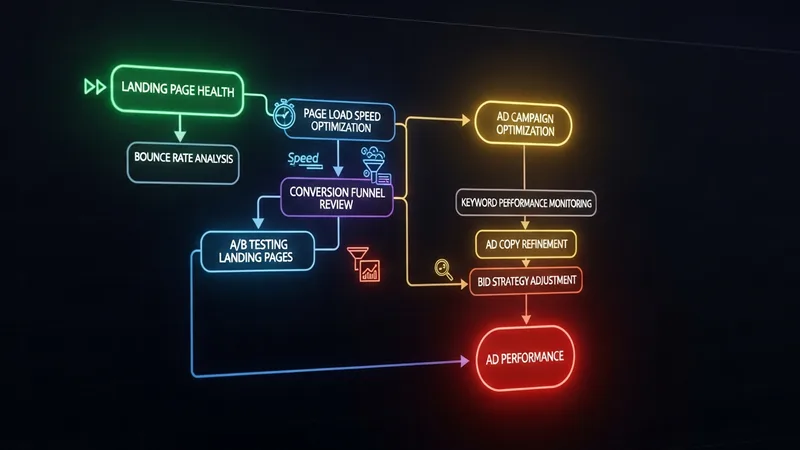
Most Ad Budget Optimization Strategy Advice Is Backwards
Open any marketing blog and search for ad budget optimization strategy. You will find articles about bid strategies, audience segmentation, dayparting, and creative testing. All of that matters. None of it addresses the biggest source of waste in most campaigns: the landing page.
Here is why the standard advice is backwards. A 10% improvement in ad targeting saves you 10% of wasted clicks. Fixing a broken landing page saves you 100% of wasted clicks to that page. The page fix has a bigger impact almost every time.
The Page-First Optimization Framework
When I audit a client's ad account, I follow a specific order. I check the pages before I check the ads. Here is the framework:
We dug into this further in our piece about ad Spend Protection Actually Looks Like in Practice.
Step 1: Verify every page works
I click through every ad to verify the landing page loads, the form submits, the checkout processes, and the page looks correct on mobile. If anything is broken, we fix it before touching a single ad setting. This is the most impactful part of any ad budget optimization strategy because a broken page invalidates every other optimization.
Step 2: Measure page speed
I test every landing page on a mobile device over a standard connection. Anything over 3 seconds gets flagged. Pages that load in 5 or 6 seconds are bleeding visitors before the ad platform even counts a conversion opportunity. We documented the math in our page speed guide.
Step 3: Verify tracking accuracy
I check that every tracking pixel is firing and reporting accurately. If your conversion tracking is broken or double-counting, every decision you make based on that data is wrong. Your "optimization" is actually de-optimization.
This is closely tied to what we wrote about in set Up Ad Campaign Auto-Pause Rules That Actually Work.
Step 4: Then optimize the ads
Only after the pages are verified, the speed is acceptable, and the tracking is accurate do I start optimizing ad settings. Now I know that every improvement I make on the ad side will actually translate to results, because the funnel can convert the traffic I send it.
A Real Client Case Study
A coaching business was spending $12,000 a month on Google Ads. Their agency had spent three months optimizing keywords, bids, and ad copy. Cost per lead was stuck at $85 and the client was frustrated.
I applied the page-first ad budget optimization strategy. What I found:
- Landing page loaded in 5.1 seconds on mobile. Fixed to 2.3 seconds
- Lead form had a CAPTCHA that blocked 20% of submissions on certain browsers. Replaced with a lighter alternative
- Google Tag was misconfigured and counting page views as conversions. Corrected
After fixing those three page issues. Zero ad changes. Cost per lead dropped from $85 to $52 in the first month. That is a 39% improvement from a page-first ad budget optimization strategy that the agency's three months of ad-side optimization could not achieve.
Apply This Strategy Today
Start with the pages. Run a free scan to check your landing page speed, functionality, and tracking right now. Fix what is broken. Then optimize your ads knowing that every click has a fair chance to convert.