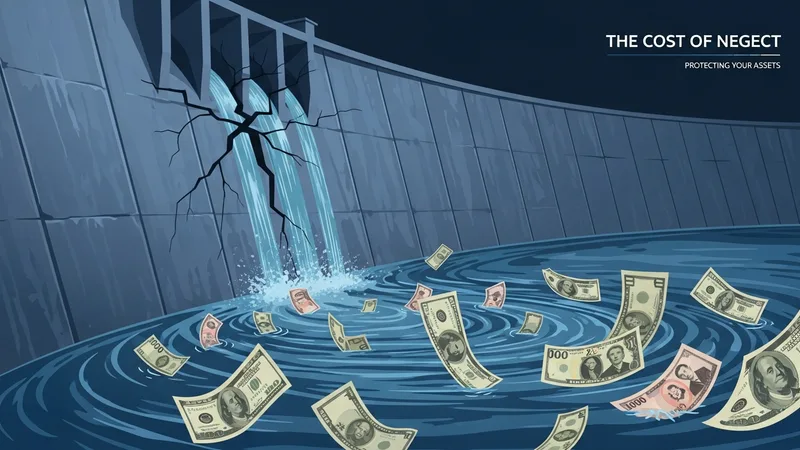
Why Small Marketing Mistakes Turn Into Big Losses
The most expensive marketing mistakes never start with a dramatic failure. They start with something so small nobody checks.
In twelve years of consulting in performance marketing, I have been called in to diagnose six-figure campaign failures that traced back to problems fitting in a single sentence related to marketing mistakes. "The SSL cert expired." "The form stopped submitting." "The redirect points to the homepage." "The tracking pixel was removed during a redesign."
None of these sound expensive. None of them trigger alarms in your ad dashboard. None of them cause your phone to ring at 2 AM. They are quiet, invisible failures that accumulate costs in the background while you focus on the work you think matters. Tweaking headlines, adjusting bids, testing new audiences.
I have compiled the most expensive quiet failures I have uncovered during client audits related to marketing mistakes. Each one started as something trivially small and grew into something painfully large.
Mistake 1: Not Setting Up Redirects After a Website Redesign
Cost: $94,400 over 8 months
A B2B software company redesigned their website and changed their URL structure related to marketing mistakes. The development team set up redirects for pages with organic traffic but skipped the pages that existed solely as Google Ads landing pages. Forty percent of their active ads ran to 404 pages for eight months before anyone discovered it.
You might also want to read about website Crash Recovery: Why the First 30 Minutes Decide Everything.
The fix took 2 hours. The damage took 8 months to accumulate. The entire loss was preventable with a 15-minute URL audit before the redesign went live.
Mistake 2: Ignoring Page Speed Degradation
Cost: $44,823 per month in lost revenue
An ecommerce brand's landing page loaded in 1.8 seconds at launch. Over twelve months, the marketing team added tracking scripts, a chat widget, a review carousel, and two popup tools. The page speed crept up to 6.2 seconds. Nobody measured it because they always loaded the cached version. I broke down the real cost of their slow page. They were losing more in revenue from speed than they spent on ads.
Mistake 3: Letting an SSL Certificate Expire Over a Weekend
Cost: $12,000 in wasted ad spend
A real estate agency's SSL certificate expired at 2:14 PM on a Wednesday. Their ads kept running until the next morning. Every visitor saw a security warning. Every click was a waste. The entire incident was preventable with a $0/month certificate monitoring alert. We covered the full story in our analysis of SSL expiration impact on ad spend.
Mistake 4: Not Testing the Checkout Page After a Code Deploy
Cost: $47,000 in 72 hours
A supplement brand's developer pushed a styling update that broke the payment script. The checkout page looked normal. The button did not work. Three days and $47,000 later, someone finally tried to buy something and discovered the button was dead.
Mistake 5: Forgetting to Monitor the Thank-You Page
Cost: $47,000 in upsell revenue + degraded campaign performance
A coaching company migrated their website and the thank-you page URL changed. Nobody updated the checkout redirect. Customers completed purchases and landed on 404 pages. Conversion tracking stopped firing. The upsell offer disappeared. Three weeks of compounding damage before a support ticket revealed the problem.
Mistake 6: Trusting "Healthy" Account-Level Metrics
Cost: Months of misallocated budget
A CMO shifted budget away from Meta and toward email based on cross-channel attribution data. The data showed Meta underperforming and email overperforming. The real story: their Meta Pixel had broken three months earlier, and every Meta-attributed conversion was being counted as an email or direct conversion. We explored how cross-channel analytics lie when tracking is compromised.
The Pattern Behind Every Mistake
Every story above shares three characteristics:
- The root cause was trivially simple. A missing redirect. An expired certificate. A broken script. None of these are complex technical problems. They are maintenance failures.
- The detection was delayed. Hours, days, weeks, or months passed between the failure and the discovery. Every hour of delay increased the cost.
- The prevention was cheap and available. In every case, automated monitoring would have caught the problem within minutes. The cost of monitoring is a rounding error compared to the cost of the failures it prevents.
The Question to Ask Yourself
How many of these mistakes could be happening in your funnel right now? You would not know. That is the point. These failures are invisible until someone looks.
You can run a free scan on your landing pages right now. It takes 30 seconds and checks for every type of failure described in this article. Think of it as a smoke detector for your funnel. You hope it finds nothing. But if it finds something, you will be glad you checked before the damage got worse.